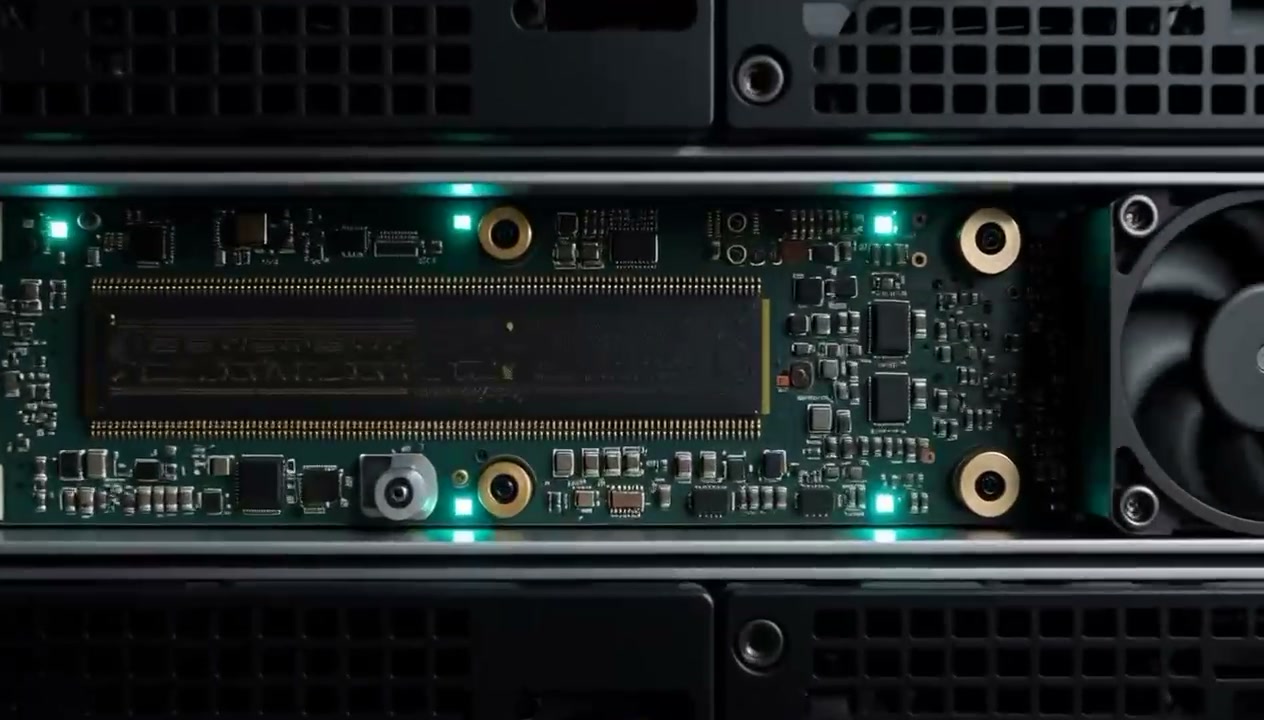
One video explains what SynapSync is building.
An architecture is hard to grasp from a list of features. The film shows what Neuronal Autonomous Infrastructure means in an operating environment.
Shown through the example of Process AI in industrial manufacturing — our first and most important field of use.
Your machines already generate the data.
The problem is understanding it.
The data exists. The intelligence layer is missing.
Anomalies without context
An alarm says something is wrong. Not why.
Quality problems without a clear cause
The defect gets caught. The search for what triggered it starts afterwards.
Thousands of signals, one problem
Technicians spend their time finding the relevant signals by hand.
A defect happens. What happened before it?
Vision catches the defect. The process context around it stays in a different system.
Process deviations that are hard to explain
Every single value looks normal. Only the interplay of signals makes the deviation visible.
Industrial data without industrial intelligence
The data is there, but events and relationships stay scattered across systems.
Every one of these costs time that somebody is paid for — and none of them is a data problem. The data is already in your plant.
We do not know what this is worth to you. You do.
We name no figure before we have seen your data — a number from someone else’s plant says nothing about yours. These four are the quantities that decide it, and you already know them:
- Cost of one hour of unplanned downtimeOn this specific line, including idle staff and restart.
- Scrap rate and material value per bad partWhat a defect costs once it has been produced.
- Hours of fault-finding per incidentMultiplied by incidents per month — usually the largest and least visible item.
- Rework and sorting effortWhat it costs to catch a quality problem late instead of early.
The pilot measures these on your own equipment, before and during operation. The numbers come out of your plant, not out of our brochure — including when they say it is not worth it.
Three applications. One platform. One controlled way in.
SynapSync puts a local industrial intelligence layer on top of your existing production. You choose where to start — a substantial part of the technical integration is carried by the platform itself.
Process AI
Sits at the machine controller, catches the slow deviation fixed alarm limits are blind to — and names the sensor responsible.
In detail →02Vision AI
Inspection on the real part — every finding carries machine, order and timestamp instead of being an isolated image file.
In detail →03Production AI
Patterns, relationships and deviations across orders, shifts and time periods — on the data you already have.
In detail →Vision AI on its own gives you a reliable inspection. Vision AI together with Process AI also gives you the trail to the cause — both work on the same plant model and mean the same machine. A correlation is flagged as a hypothesis, never as a proven cause.
Discover · identify · connect · verify. SynapSync is built to reduce the manual effort normally required to connect industrial data — how far that goes on your systems is measured in the pilot, not promised beforehand. Either way, connecting them is a work step inside the pilot, not a precondition for it.
- No PLC replacement
- No machine modification
- Safety untouched
- Where do I start?
- With one pilot. You pick one of the three applications — or a combination. Which line, which machines and which scope is agreed together. The pilot is not the product; it is the bounded first step, and after it you decide whether anything follows.
- What does it cost?
- A fixed scope at a fixed price, both in writing before you commission anything. We also name what is not included up front: new camera, server or GPU hardware, vendor licences, and changes to PLC or safety controls.
- What exactly am I buying?
- You buy the solution, not the technology. The models trained for your equipment, your configurations and your operating data are yours. For the platform and the learning layer beneath it — internally called Henri — you receive a perpetual right of use at the agreed site — no expiry date, no remote kill switch. The technology itself stays with SynapSync.Licensing & terms →
Every new line, machine or application is validated in a bounded pilot first. Only then do you decide about expanding — there is no automatic roll-out.
A demo instance of SAIP runs publicly — demo data, no installation, no appointment.
There is no mechanism by which we could observe your operation, and no licence check. No third-party service whose outage could reach your production line.
The system runs on a physically separated network — as the normal case, not as a special clearance. What your site needs for it is settled by the environment assessment, before the quote.
Licensed once, usable indefinitely — by design there is no path to revoke it remotely. Updates for three years as standard, extendable.
Platform, applications, architecture
The Secure AI Infrastructure Platform is where Process AI and Henri actually reach your people: dashboards, explained alarms, operator feedback, administration. You buy the solution and operate SAIP; the technology behind it stays with SynapSync.
- One surface for every system
- Every connected machine, every data source and every module appears in the same interface — not one tool per system.
- Runs where your data is
- The platform runs inside your network, air-gap capable. Detection, history and the assistant stay on hardware you own.
- Grows with every pilot
- Every further pilot connects to the same platform — no second interface, no second connection effort for the same data sources.
Every further use case runs through a bounded pilot of its own — fixed price, fixed timeline, one named result. Because all applications sit on the same integration layer, no second connection effort arises for the same data sources. What you can hold us to, and where it can lead:
Discuss your use case →Three commitments. They apply to the pilot, before anything is signed.
- 01A fixed priceSet before the start, in writing. Not billed by effort, not by day rate. If it takes longer, that is our problem.
- 02A fixed timelineOne to seven weeks, named per module — not estimated. You know the end date before the first day.
- 03An honest answerIncluding the one that says it is not worth it in your plant. Then it stops there, and you have still learned something.
Where things can go after the pilot.
The pilot is the way in. What comes after it is your decision — every further use case runs through a bounded pilot of its own, at a fixed price and a fixed timeline.
The pilot
You pick one of the three applications — or a combination. Line, machines and scope are agreed together. The pilot is not the product; it is the bounded first step, and after it you decide whether anything follows at all.
Process AI sits directly at the machine controller, reads every sensor value as it happens, and catches the slow deviation that fixed alarm limits are structurally blind to.
- Explained alarms
- Not a score — the named sensor, its reading, the expected value, and the direction it is wrong in. A work instruction instead of a red light.
- No data-collection project
- The drift watchdog learns each signal’s normal range from the first readings. Value from week one, without months of collecting.
- The way in
- A bounded pilot at a fixed price — fixed timeline, one named result.
From signal to connection. To action.
The difference is not the alarm. It is the time between a signal and understanding what it means.
- 08:14Temperature drifts upward — unnoticed
- 11:40Bearing behaviour keeps changing — unnoticed
- 15:22Machine stops
- 16:10Search for the trigger begins
- 17:40Bearing narrowed down as the trigger
- 08:14Deviation detected: temperature
- 08:16Signals connected: temperature, vibration, motor current
- 08:18Hypothesis: bearing wear — traceable down to the raw signal
- 08:20Maintenance window proposed
Not more data. More connection.
SAIP connects the production, machine and process data you already have. The detection behind it is not a simulation: it runs in a real factory today — on site, air-gap capable, with no cloud connection.
What that is worth in your plant depends on your machines, your batches, your shifts — and gets calculated during the pilot, on your own data.
Show SAIP your process.
We connect one machine to the data you already produce and show which relationships become visible in it.
Start a pilot →A camera system detects defect patterns. An intelligence layer works out what the defect has to do with the plant — on the same connectivity, the same industrial context and the same plant model as Process AI.
- Inspection with a case reference
- Every finding carries machine, order and timestamp — instead of an isolated image file somebody has to follow up manually.
- History instead of snapshot
- Defect patterns become comparable across shifts, batches and product variants.
- Assessment that learns
- Confirmed and rejected findings improve the inspection profile — documented. The operator keeps the final say.
Analysis of selected production information: patterns, relationships and deviations across orders, shifts and time periods — on the data you already have.
- On existing data
- Works with what your systems already record — no new sensors as a precondition.
- Beyond the single value
- A deviation only becomes meaningful next to the orders, shifts and periods around it.
- Same integration layer
- Runs on the same connectivity as Process AI and Vision AI — adding it later means no second connection effort.
Artificial intelligence describes a way of processing information. Henri describes a system architecture that organises perception, memory, learning, reasoning and autonomous behaviour as one coherent whole.
- AI is a tool, not a requirement
- Models can be used, swapped out, or left out entirely. The architecture stays. That is what makes it durable rather than dependent on whichever model is current.
- Autonomous capabilities
- Perception, state, memory, association, learning, evaluation, response — as one system, not a toolbox of separate parts.
- Connection optional
- Henri can be connected to Process AI — but it does not have to be. Each stands on its own.
We build the infrastructure for autonomous systems.
SynapSync is developing a new class of system architecture: Neuronal Autonomous Infrastructure. It creates an autonomous system layer that is not bound to a single model, a single use case or a single data source — it brings perception, context, state, relationships, experience and decision logic together into one continuous system.
Artificial intelligence is not the architecture. It can be a tool inside it.
- 01Architecture
- Not a single model and not a single application. An architecture in its own right, bringing different data sources, methods and capabilities together into one continuous system.
- 02Continuity
- The system does not work towards one request at a time. States, events and relationships can be carried across ongoing operation as context and used again.
- 03Autonomy
- The architecture is designed to take in situations on its own, assess them and respond to them within defined limits.
Our first and most important application: industrial environments. That is where the architecture becomes Process AI.
See Process AIFrom real operating environments to autonomous systems.
SynapSync builds the layer between the physical world and autonomous intelligence.
How the architecture worksNot an AI module bolted onto existing software. An infrastructure that runs inside the plant.
The difference is not a better model. It is where the intelligence sits, what it can reach, and what it keeps once the incident is over.
- Event
- Finding
- Confirmation
- Learned
- Available next time
And none of it leaves the building: there is no outbound connection to switch off, because there is none to begin with.
How Companies Start with SynapSync
Two steps, each with its own scope and its own timeline. After the pilot you decide whether anything follows at all — you have a result in hand either way.
- 01Pilot
Keep the way in bounded
Does it hold up against real production data?
You pick one of the three applications — or a combination. Four phases at fixed scope and fixed price: architecture and access, integration, use case, acceptance. After that you decide whether anything follows at all.
- 02Enterprise Deployment
Scale across your operation
What does it take to run this everywhere?
What the pilot proved goes into production across the operation — including the server and GPU infrastructure it runs on. Every further line runs through the same bounded pilot.
Everything runs in one platform
Whichever step you are on, you work in the same surface: dashboards, explained alarms, operator feedback, administration. You buy the solution and operate the platform; the technology behind it stays with SynapSync.
Start Your SynapSync Platform.
Fixed price. Fixed timeline. One bounded pilot with one of the three applications — after that, you decide.